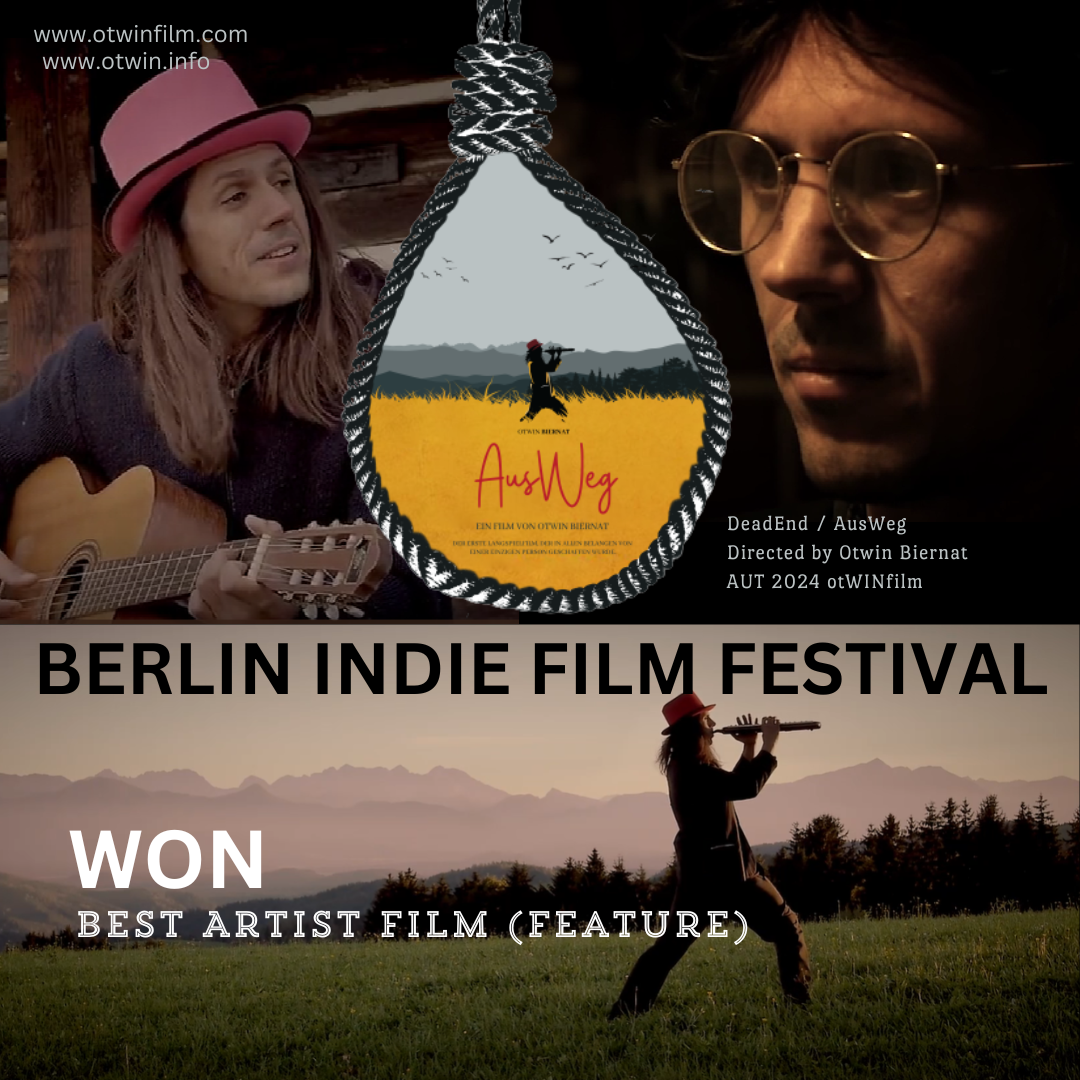
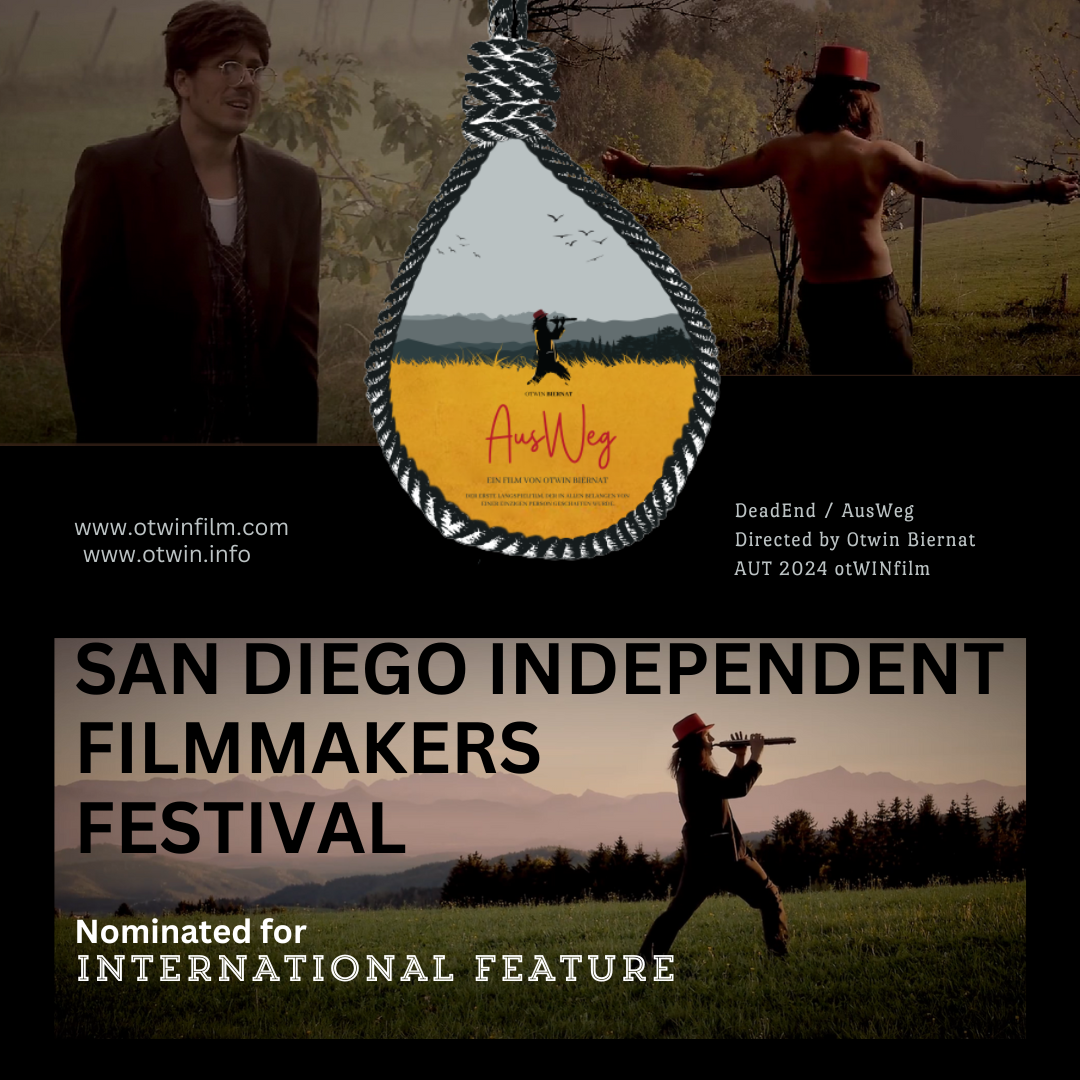
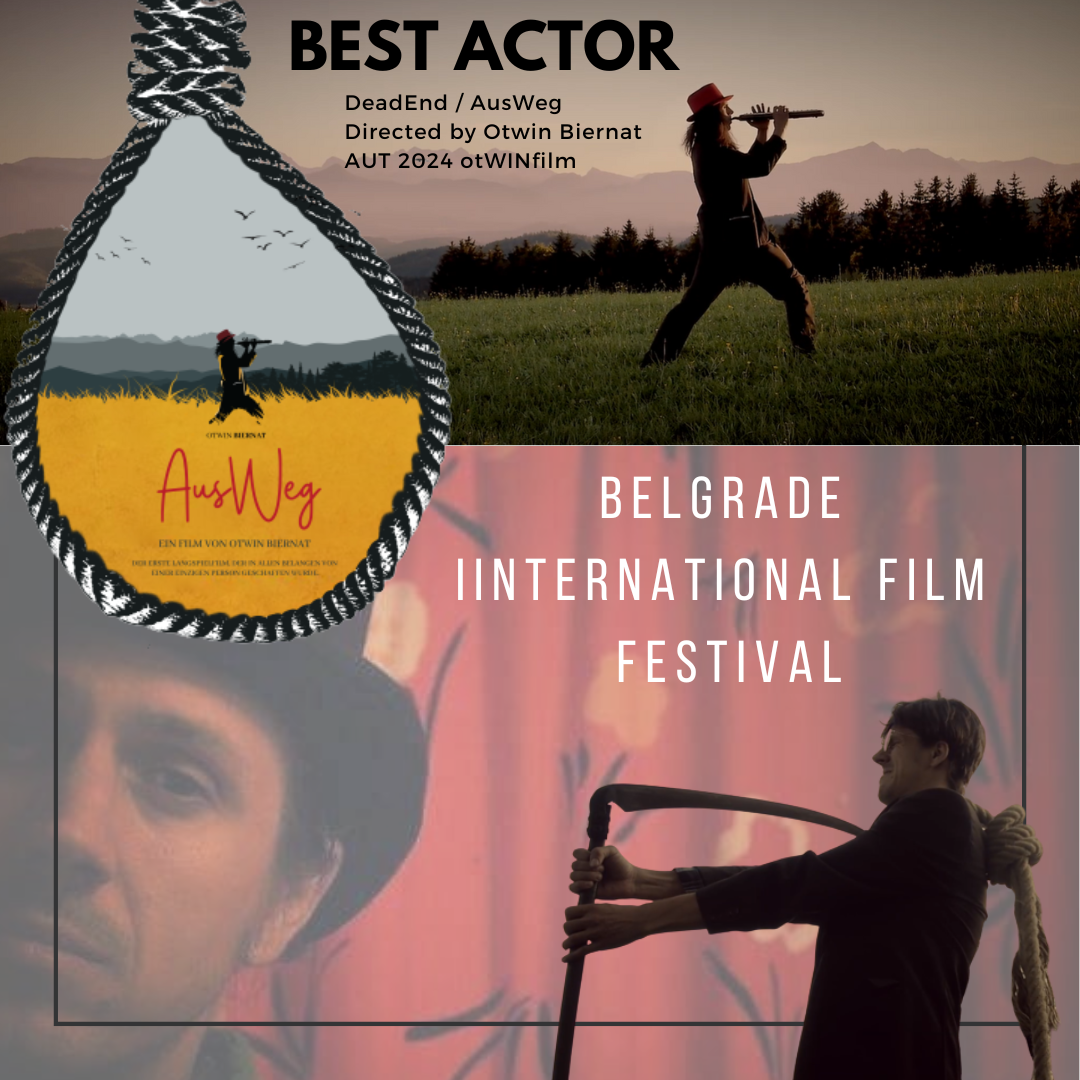
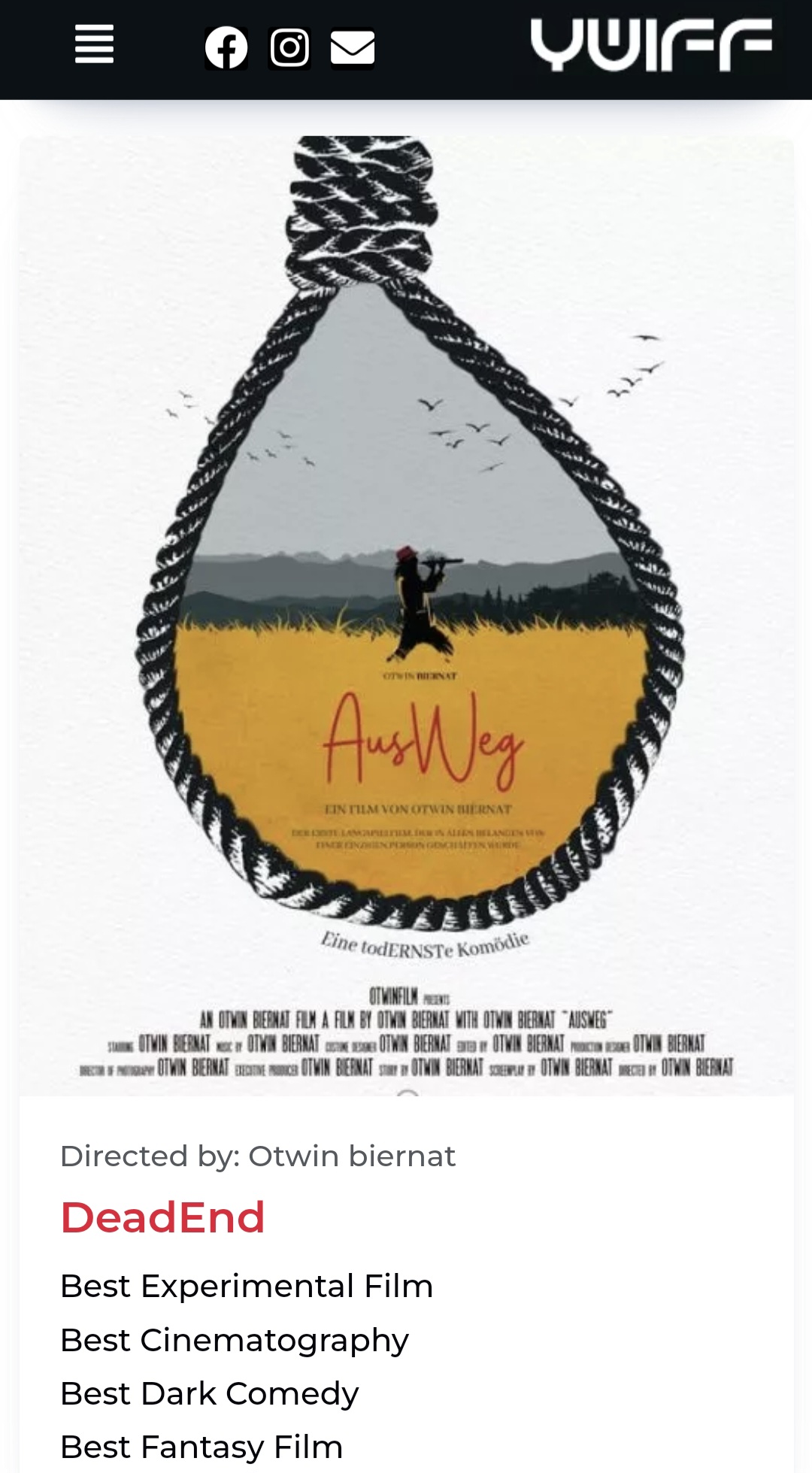
AusWeg (DeadEnd)

A satirical mystery drama
Created entirely by a single filmmaker, DeadEnd follows a suicidal man who retreats to an isolated alpine cabin — only to be confronted by his own double, turning his final act into an absurd and existential battle for survival.

Distribution company: Echelon Studios
Synopsis
Ernst is an unhappy pessimist, paralyzed by his inability to make even the simplest decisions. Seeking a final escape, he drives to a secluded cottage high
in the Alps, planning to end his life against the backdrop of a breathtaking mountain panorama. But every attempt fails.
Then the impossible happens. He is confronted by a man who looks exactly like him.
Shaken to the core, Ernst tries to flee — only to discover that his car key has disappeared. Night is falling. The mountains grow darker, colder, more
threatening. Trapped in isolation and overwhelmed by his own fears, Ernst is forced into a psychological and physical fight for survival.
DeadEnd is the second feature film by Otwin Biernat — a haunting exploration of identity, fear, and the struggle against oneself.

EXPERIMENTAL, SATIRE, MYSTERY, DRAMA, COMEDY, TRHILLER


What makes AusWeg / DeadEnd special?
-
DeadEnd began with a simple but radical idea: to confront both artistic and
personal limits without protection.
I stripped filmmaking down to its essentials — no crew, no artificial lighting, no external sound design, no safety structure. Just a camera, a microphone, natural light, and myself. The process became an experiment in reduction: what remains when comfort disappears?
Thematically, the film deals with self-determination. Ernst, the protagonist, is paralyzed by indecision and confronted with a version of himself he cannot escape. His struggle mirrors the filmmaking process itself. As he reaches his limits, so did I.
Working alone in isolation — physically and psychologically — forced me into a state of heightened awareness. There were moments when satire and reality almost collapsed into one another. But that tension was essential. I believe that when you remove comfort, you sharpen perception. When you remove excess, you expose truth.
The Danish Dogme 95 movement influenced me deeply, not as a rulebook, but as a mindset: the courage to reduce, to risk, to trust the immediacy of the moment.
For me, cinema is not about technical perfection. It is about emotional authenticity. The audience may not see the struggle behind a film, but they can feel whether something was at stake.
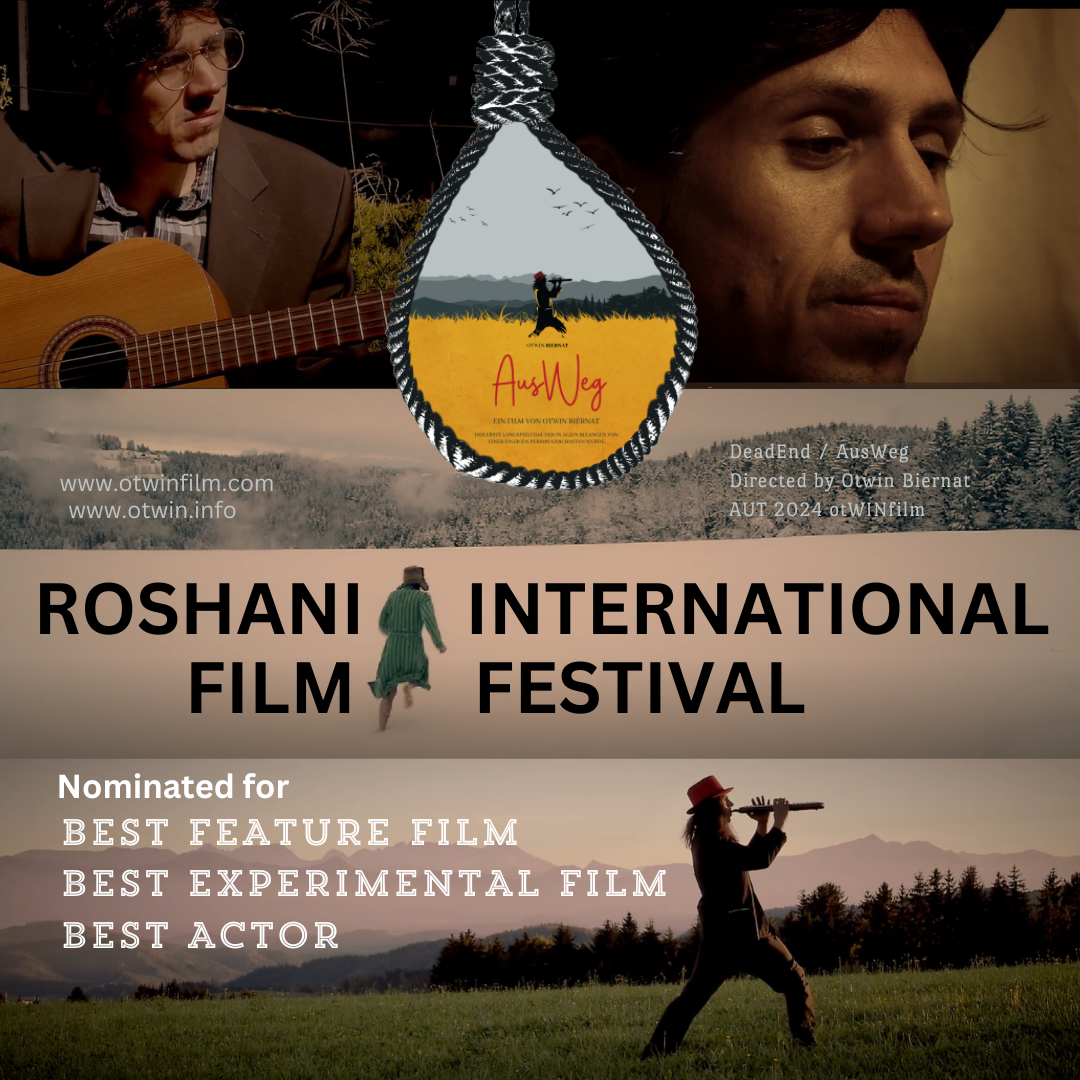
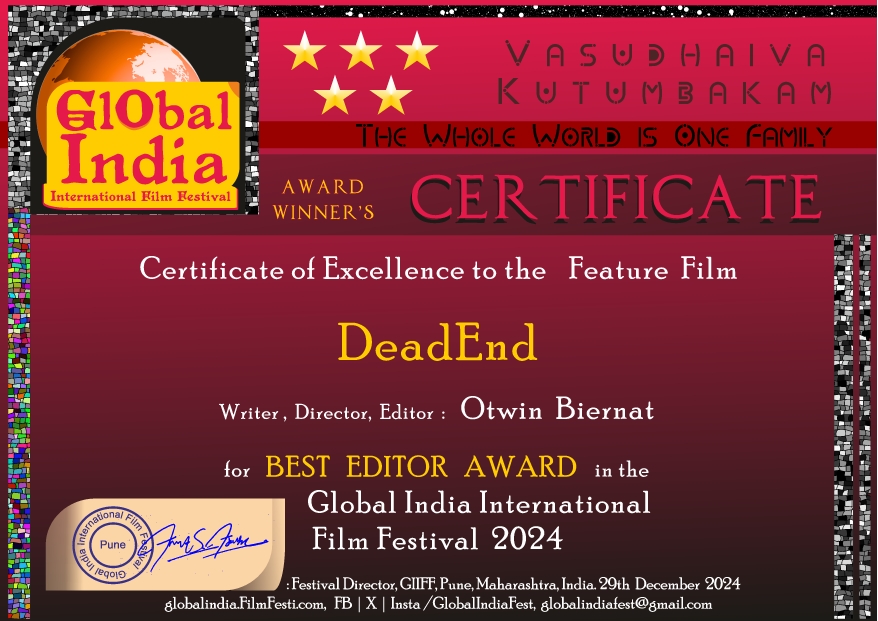
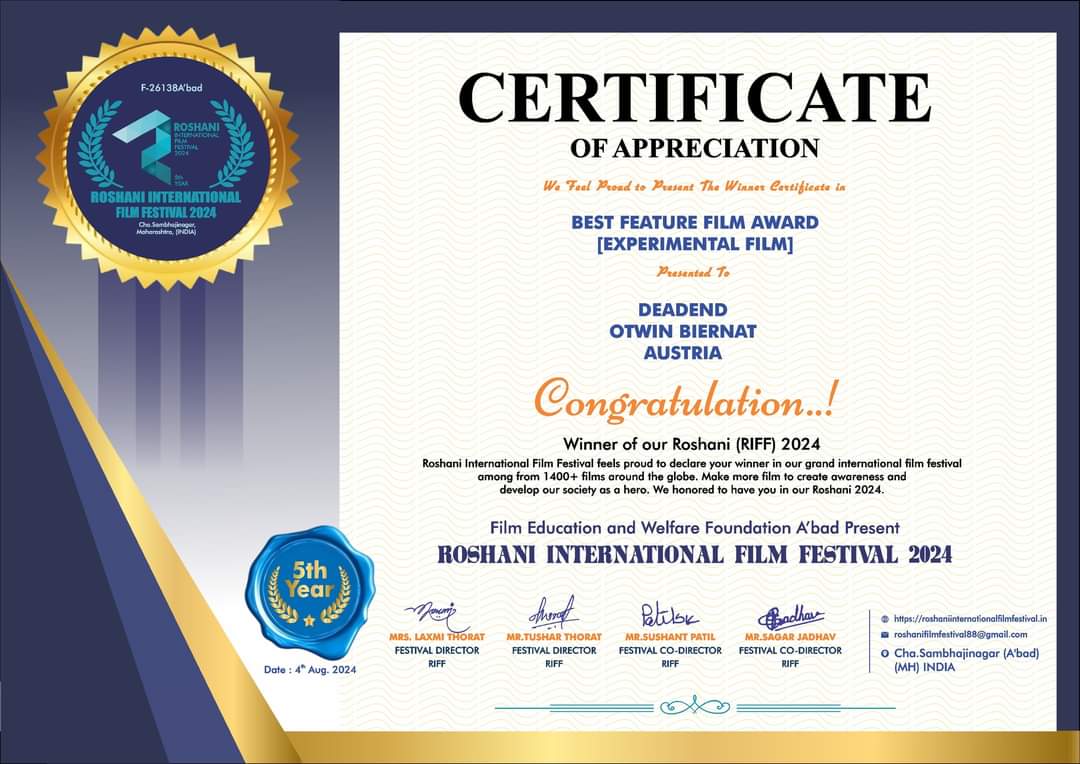
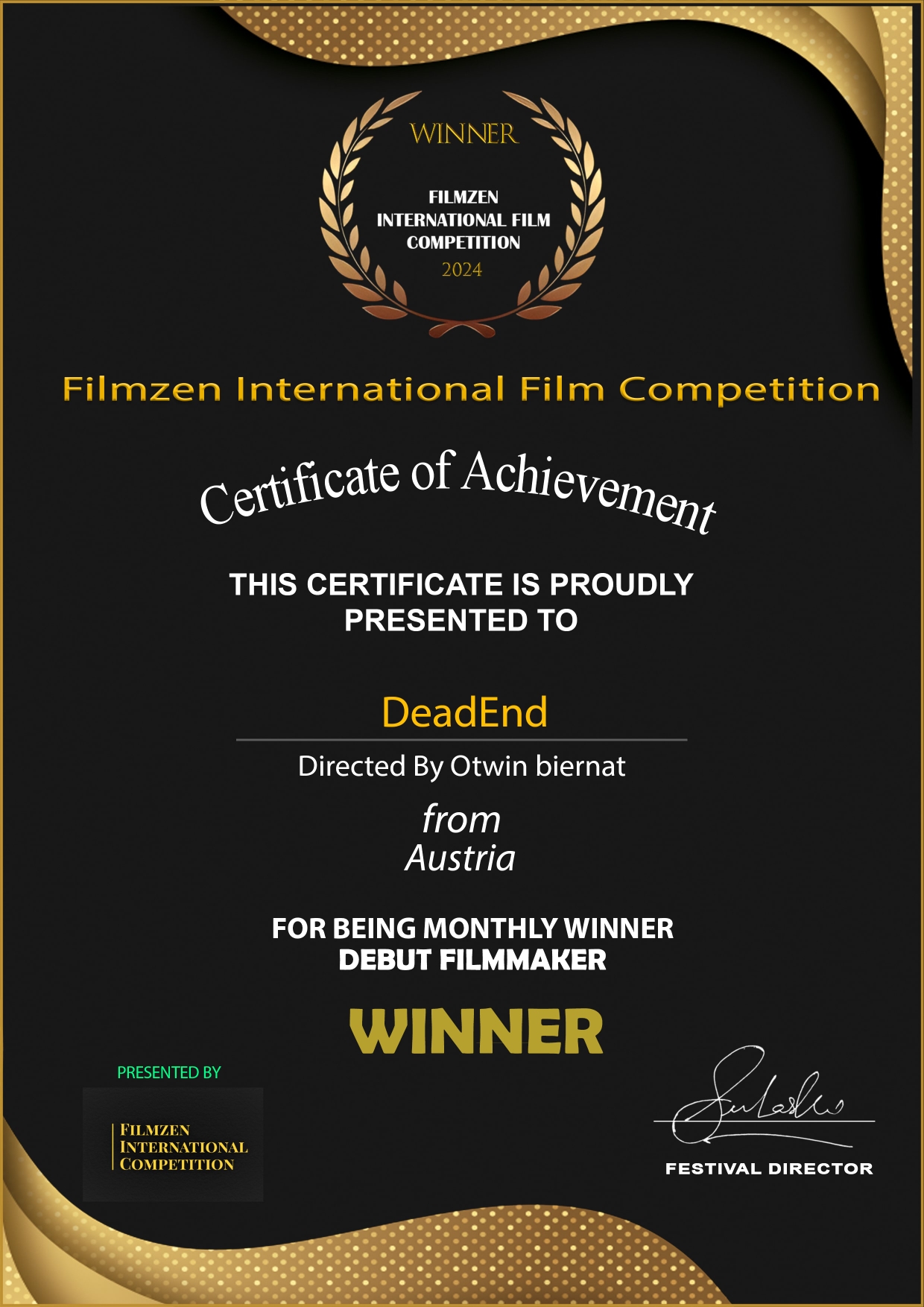
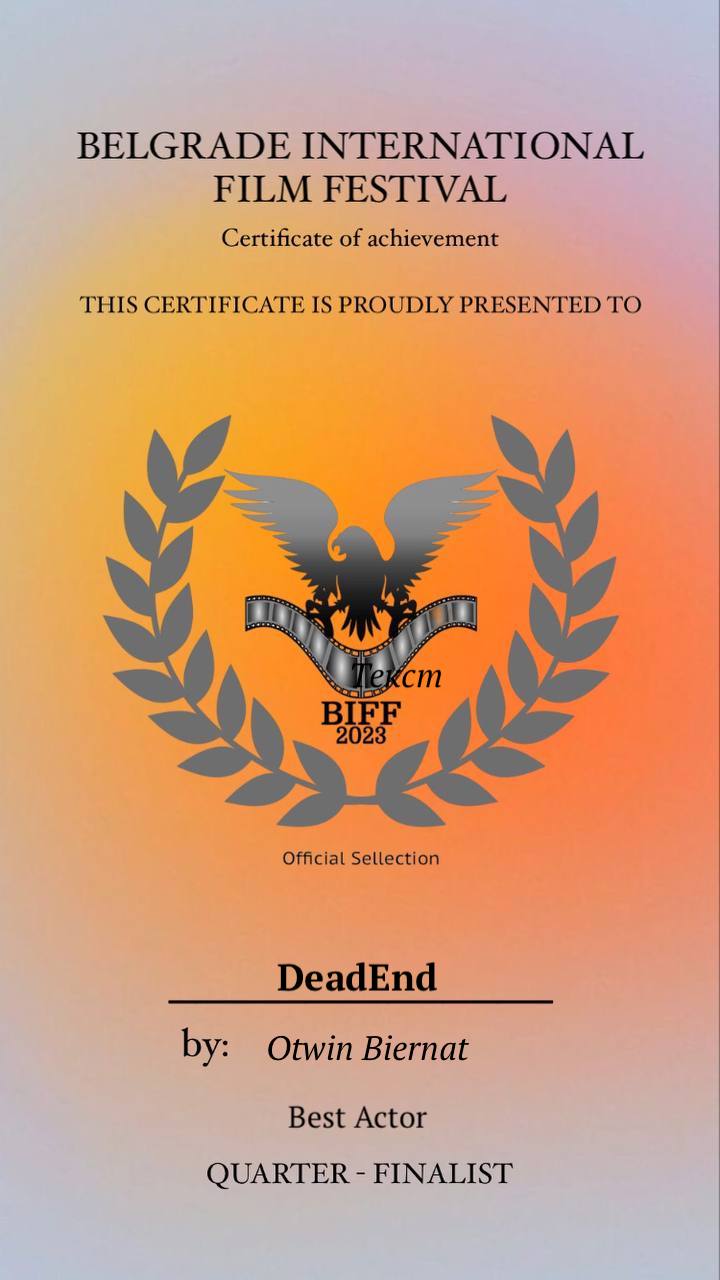
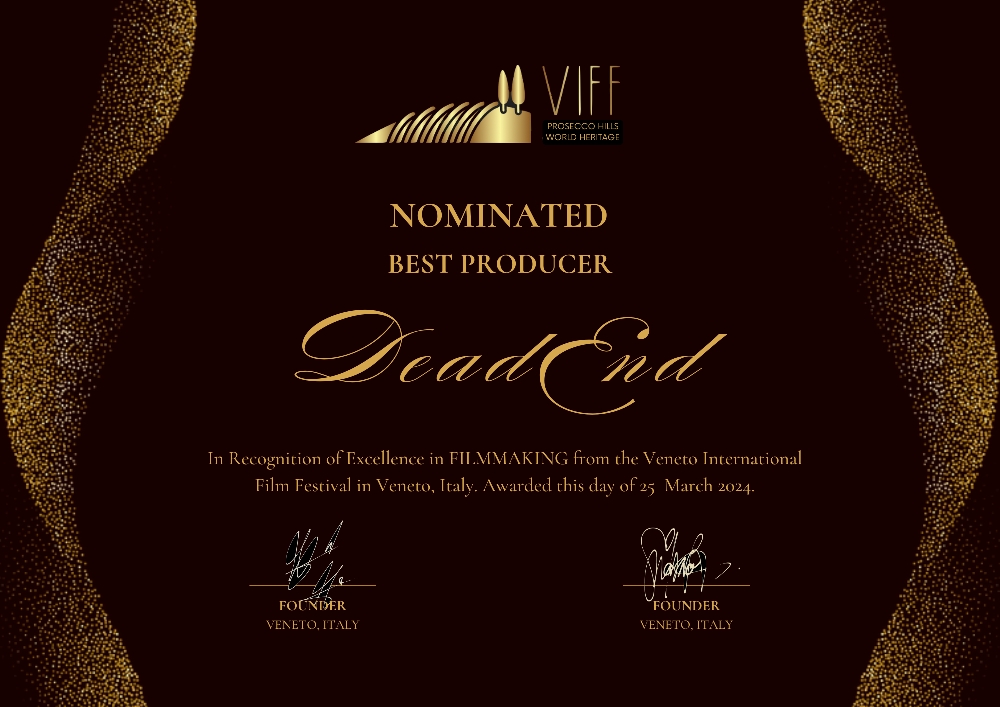
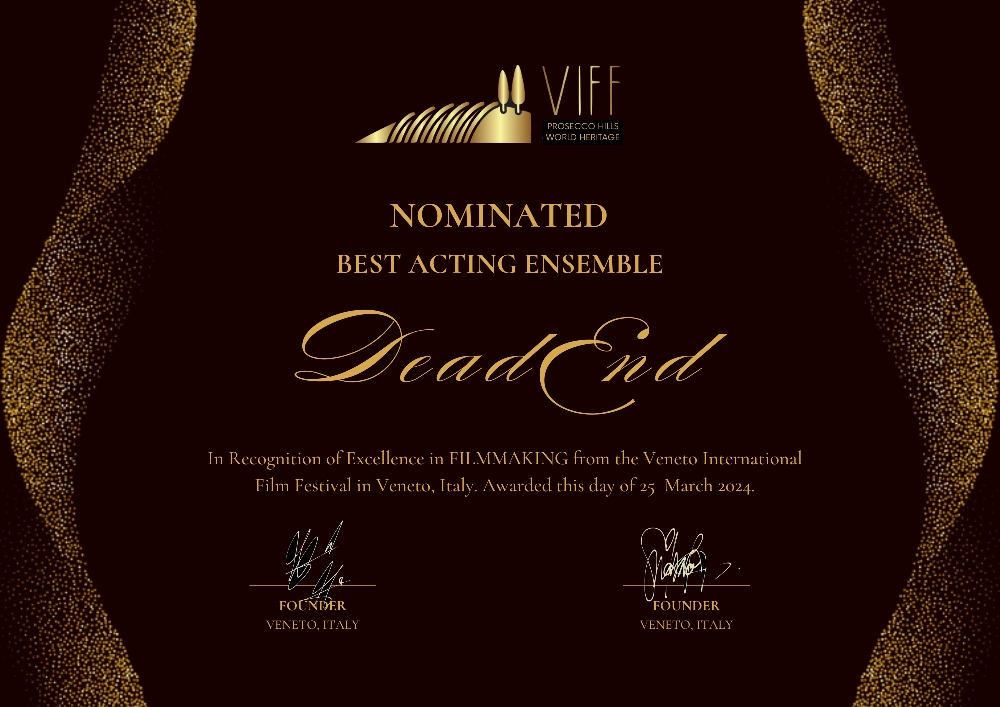
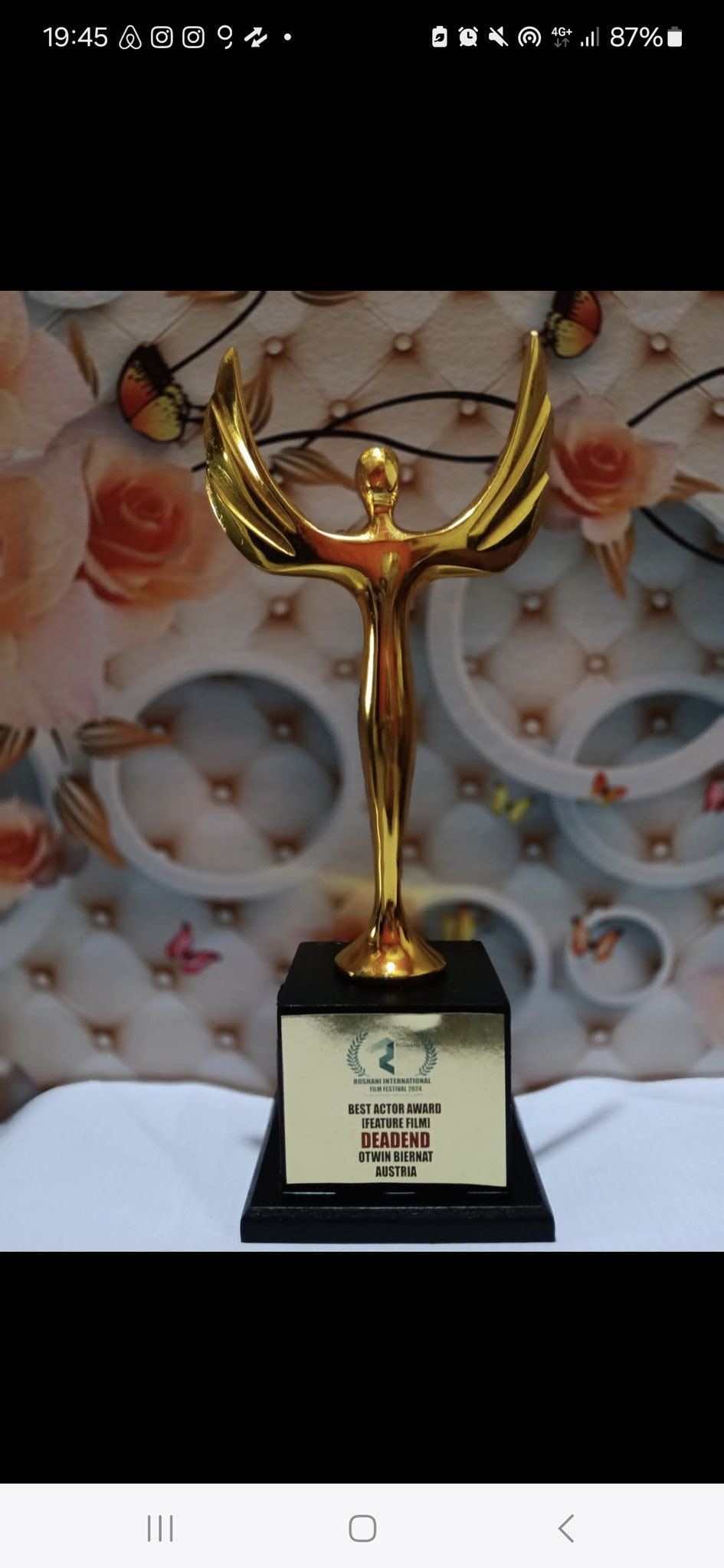
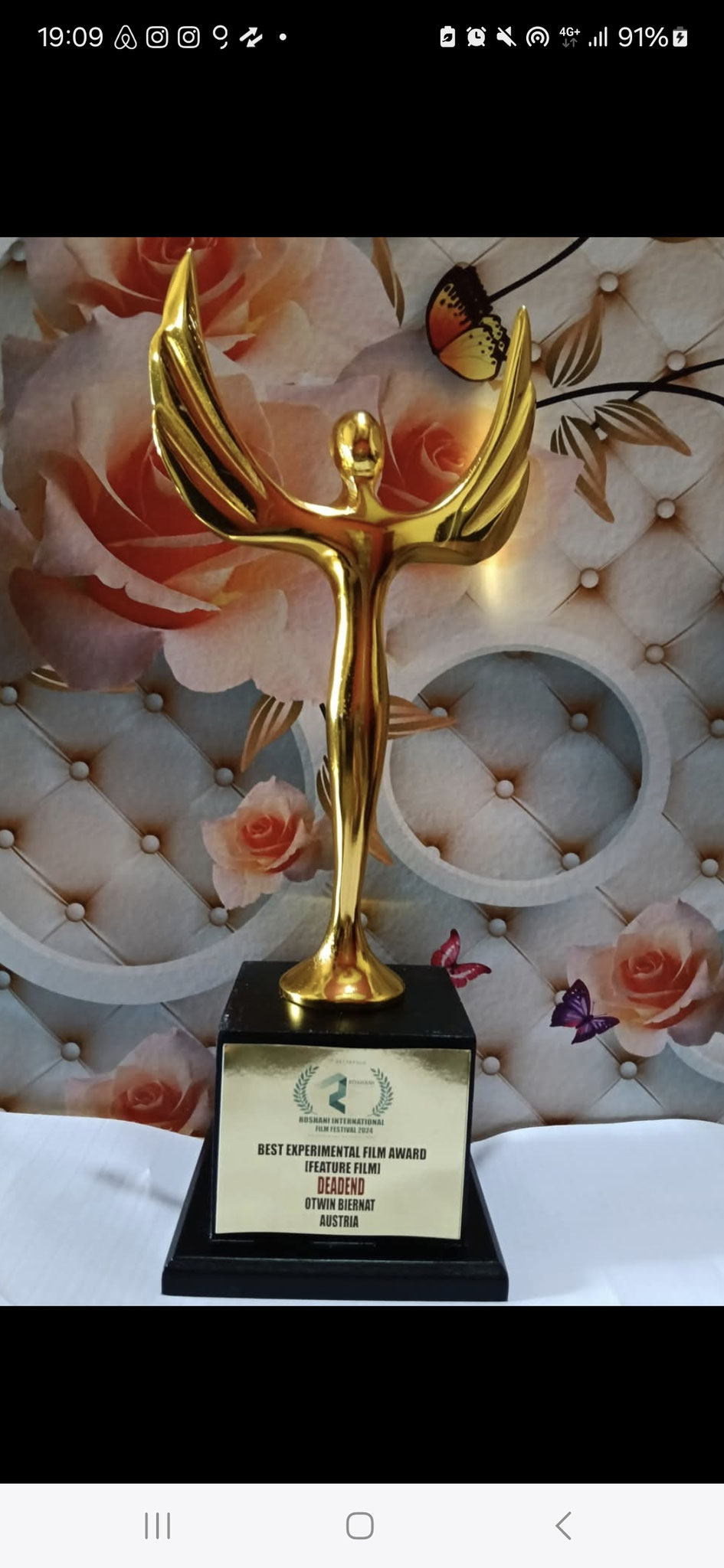
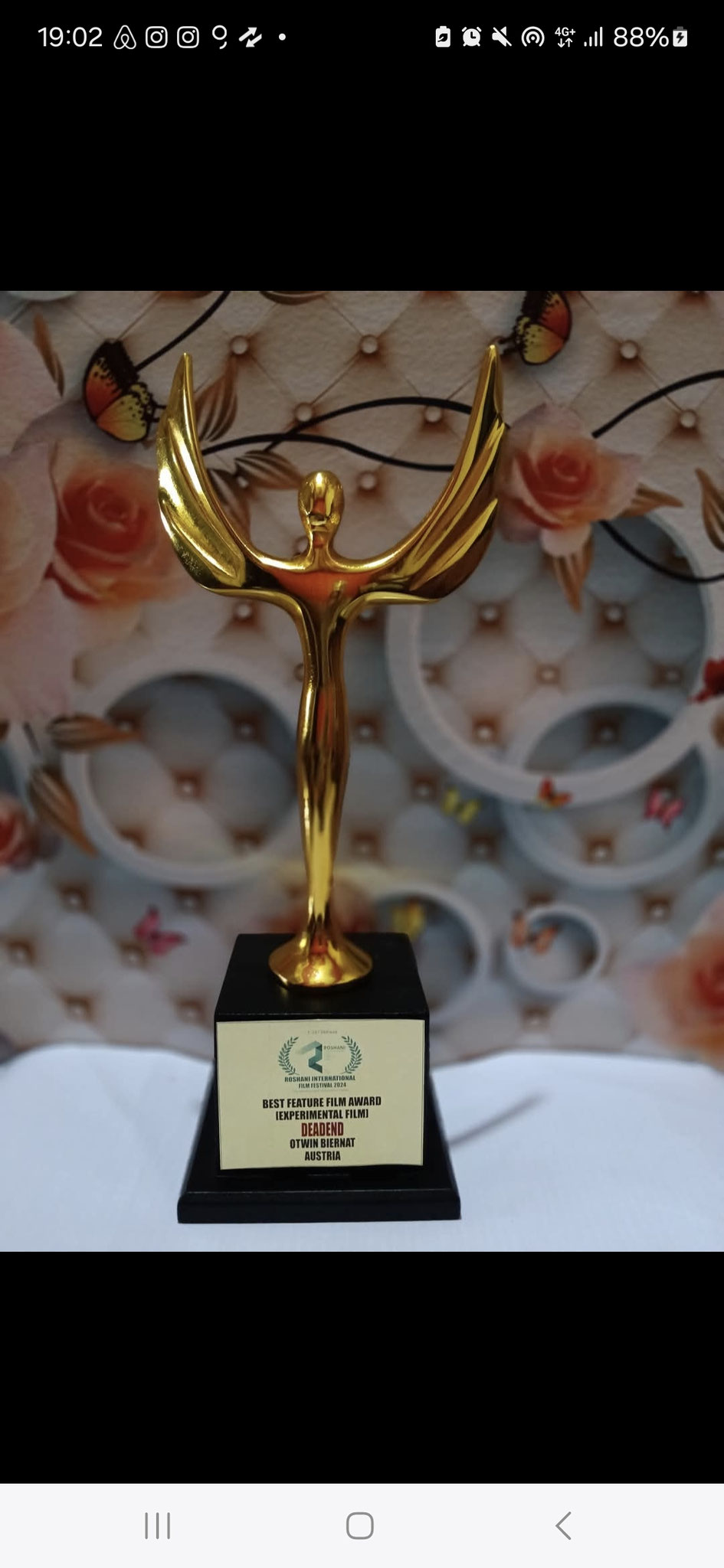
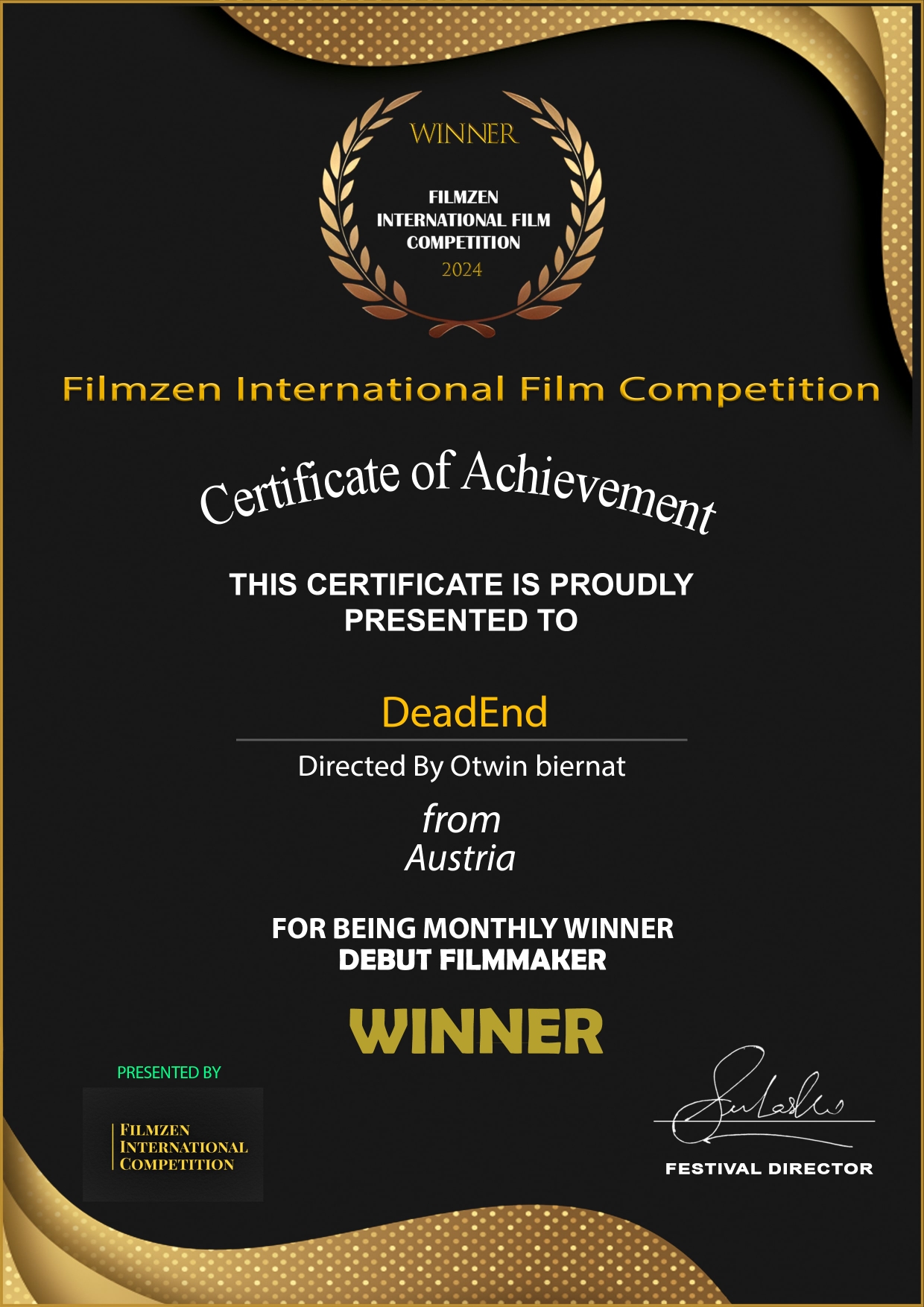
DeadEnd screened at international film festivals and received many awards. Yet the true achievement was not the recognition — it was the confrontation with my own boundaries.
Cinema, like life, demands that we move forward — especially when it becomes uncomfortable.
Anecdote:
"There was only me, there was nobody around.
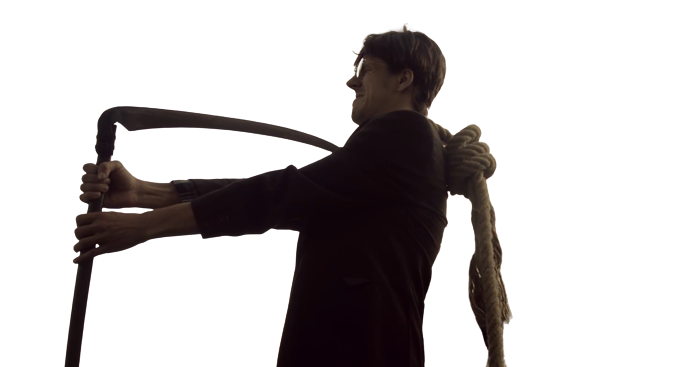
If you are the onlyone somewhere remote in the mountains, you set up the camera, then you step on a shacky chair which is placed on top of another shacky chair and you put a rope around your
neck that hangs down from a tree, that´s the moment when you should realise that you may dive a bit too deep into the topic of such a project. But at that time it felt totally normal for me. But
a year later when I was editing the film I got aware of my stupidity and the real danger I have put myself into."